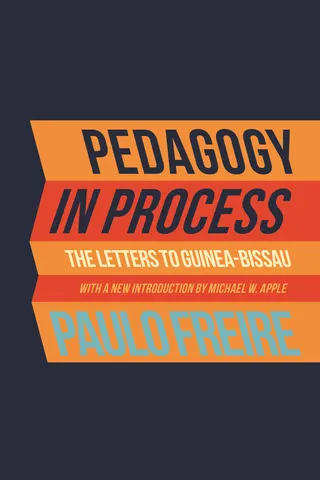


“There is the duty, for example, to never, under any circumstances, accept or encourage fatalist positions.”
“The fatalism of the poor undeniably helps only the dominant.”
“It is because we can transform the world that we are with it and with others.”
“Education in the service of this lucrative combination obviously cannot have as its objective to reveal the alienating character of the process. What it must do, therefore, is to hide it, reducing education to the mere transference of know-how, seen as neutral.”
“The history of those colonized was thought to have begun with the civilizing presence of the colonizers. The culture of the colonized was a reflection of their barbaric way of seeing the world. Culture belonged only to the colonizers.”
“Divorced from the reality of the country, it was, for this very reason, a school for a minority, and thus against the majority.”
“Such “neutrality” serves as the foundation for reducing the education of a plumber to training in the techniques and procedures involved in wrench mastering.”
“The state should neither be an almighty entity nor a lackey that obeys the orders of those who live well.”
“The inherited colonial education had as one of its principal objectives the de-Africanization of nationals.”
“Amilcar affirmed that the middle-class intellectual needed the courage to commit class suicide before being reborn as a revolutionary worker, able to contribute to the struggle for liberation.”
“If, in reality, I am not in the world simply to adapt to it, but rather to transform it, and if it is not possible to change the world without a certain dream or vision for it, I must make use of every possibility there is not only to speak about my utopia, but also to engage in practices consistent with it.”
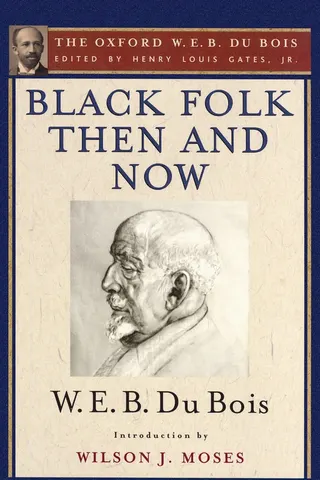
“Poverty is unnecessary and the clear result of greed and muddle. It spawns physical weakness, ignorance, and dishonesty. There was a time when poverty was due mainly to scarcity, but today it is due to monopoly founded on our industrial organization.”
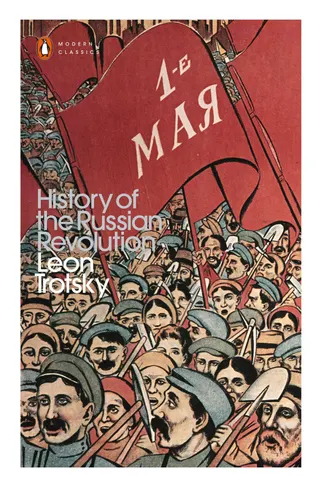
“The dynamic of revolutionary events is directly determined by swift, intense, and passionate changes in the psychology of classes which have already formed themselves before the revolution.”
“The proletariat of the world consists not simply of white European and American workers but overwhelmingly of the dark workers of Asia, Africa, the islands of the sea, and South and Central America.”
“The history of a revolution is for us first of all a history of the forcible entrance of the masses into the realm of rulership over their own destiny.”
“The point is that society does not change its institutions as need arises, the way a mechanic changes his instruments. On the contrary, society actually takes the institutions which hang upon it as given once and for all.”
“For decades the oppositional criticism is nothing more than a safety valve for mass dissatisfaction, a condition of the stability of the social structure.”
“if mere political democracy is allowed to widen into industrial democracy and the democracy of culture and art.”
“The most indubitable feature of a revolution is the direct interference of the masses in historical events.”
“It is the rise of these people that is the rise of the world. The problem of the twentieth century is the problem of the color line.”
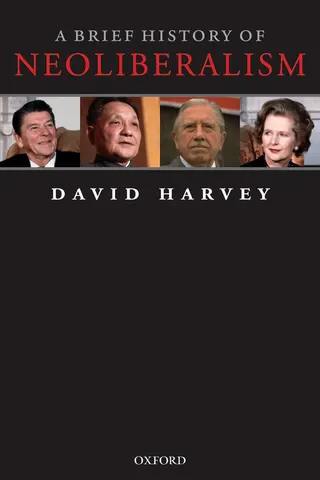
“Furthermore, if markets do not exist (in areas such as land, water, education, health care, social security, or environmental pollution) then they must be created, by state action if necessary.”
“These debt crises were orchestrated, managed, and controlled both to rationalize the system and to redistribute assets.”
“In the political system there was a flexibility in gender classification which allowed the incorporation of certain categories of woman into the male category, giving them positions of authority in the power structure.”
“In Nnobi’s traditional cultural system, with the Igbo language’s flexible gender construction, the conceptualization of daughters as male in ritual matters and politically in relation to wives, did not imply that daughters should be seen as ‘manlike’; nor were ‘female husbands’ expected to dress or behave like men.”
“Neoliberalism is in the first instance a theory of political economic practices that proposes that human well-being can best be advanced by liberating individual entrepreneurial freedoms and skills within an institutional framework characterized by strong private property rights, free markets, and free trade.”
“Crisis creation, management, and manipulation on the world stage has evolved into the fine art of deliberative redistribution of wealth from poor countries to the rich.”
“There is, therefore, no linguistic or mental adjustment or confusion in references to a woman in a typical male role. Powerful women were not divorced or alienated from ‘fellow’ women.”
“What neoliberals call ‘confiscatory deflation’ is, furthermore, nothing other than accumulation by dispossession.”
“The ultimate indication of wealth and power, the title system, was open to men and women”
“The only way he could ‘save’ the city was by satisfying the investment bankers while diminishing the standard of living of most New Yorkers.”